Case Study

AI Transforms Data Extraction for Mining Intelligence Leader

Case Study Impact Metrics
80%+
Reduction in manual data gathering
100%
Source traceability
500+
Unit mapping rules standardized
2 weeks
To production

Production Software Engineering Production AI Integration Production AI Architecture

Operational intelligence depends on data that already exists, but rarely in a usable form. Thousands of documents. Different formats, languages, structures. The effort to extract data and standardize all of it into something analysis-ready is one of the most underestimated costs in data-driven organizations. It’s manual, repetitive, and it gates every decision downstream.

Thousands of PDF’s, all manually searched

The hidden cost of manual data extraction at scale
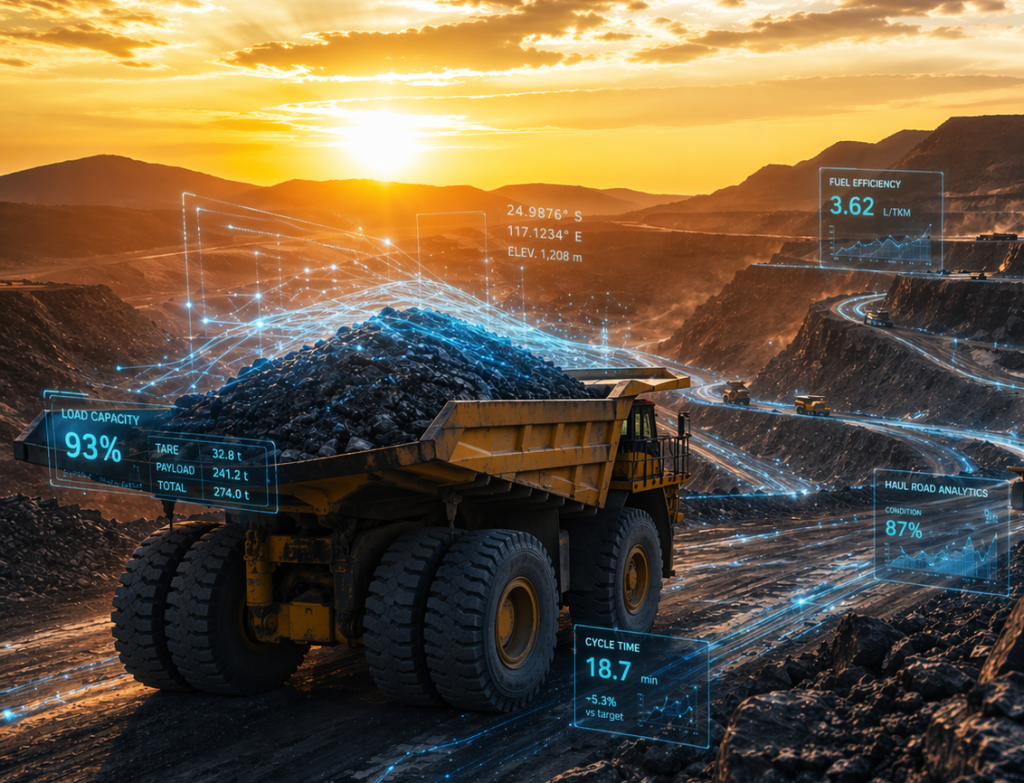
Our client, a top-three global management consultancy, provides operational intelligence to mining companies, covering everything from production volumes and reserves to recovery rates and development stages. Hundreds of mines, updated regularly. Mining executives rely on this data to make real decisions about where to invest, where to cut, and where the gaps are in their operations. 

But getting to that data was rather slow. 

Every day, a team of analysts opened a PDF search software and started hunting. Thousands of documents. A data point buried in a table on page 47, or halfway through a technical report. If it wasn’t there, open the next document. And the next. Multiple people doing this, all day, across hundreds of mine records. 

They were paying for an expensive PDF subscription just to search. And still falling behind on coverage. 

From manual extraction to AI-driven ingestion

Why the AI needed a production home, not just accuracy

As part of the project, an AI capability was built to read mining documents and extract data points. The model got refined throughout the integration, evolving alongside the system itself. But a model on its own doesn’t help an analyst at 8am who needs to update 30 mine records before lunch. 

That intelligence had to live inside the tools analysts actually use: pre-filled fields, confidence scores, source citations, and an approval workflow where people review and accept instead of search and type. And it had to happen fast.

Mining Intelligence Company Replaces Manual Data Extraction with AI
risks

The production layer around the AI

Integration, validation, and the infrastructure that earns analyst trust

We didn’t rebuild the AI solution; we improved it and built everything around it. 

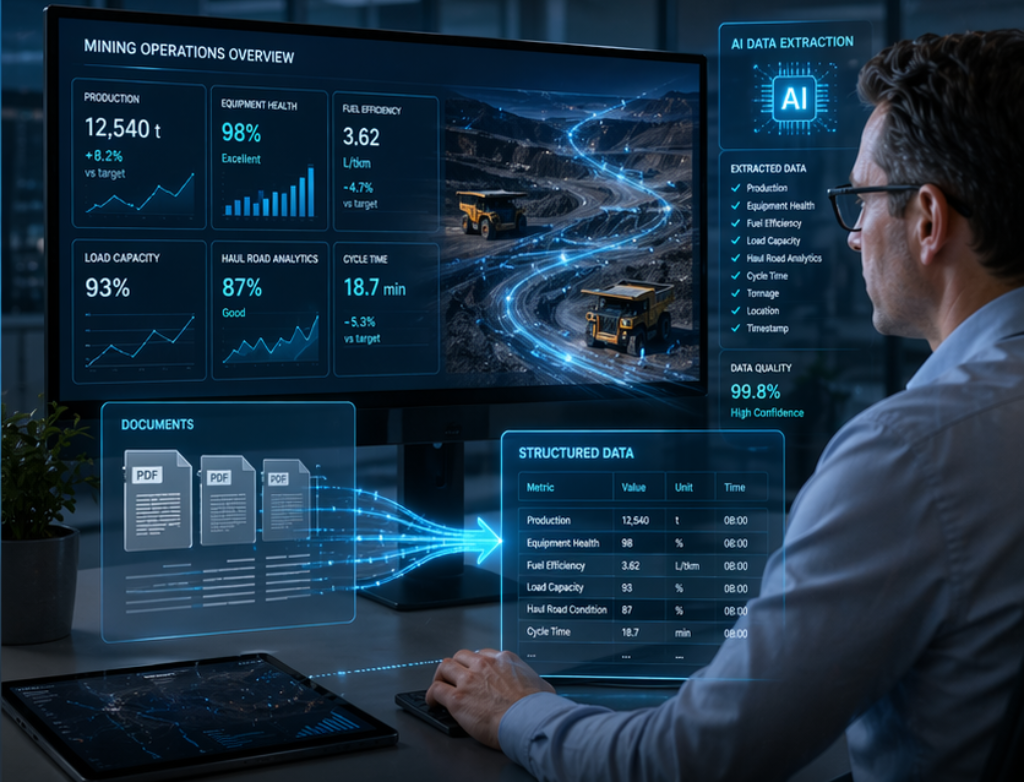
The agentic AI component connects to the full document library. When an analyst opens a mine record, the relevant fields are already populated, each tagged with the source document, page, and section. A confidence indicator tells analysts which values to trust and which to double-check. One click to accept. Edit if something’s off. Full audit trail either way. 

We added layered validation so bad data can’t slip through, a unit standardization engine that converts values automatically, and a senior review workflow for certification before data hits the production database. 

The whole system went live in two weeks. Not a pilot. Production, with real data and real analysts using it from day one. 

data-processing

What changed

Measurable impact from day one

Manual data gathering time dropped by over 80%. Analysts shifted from searching to reviewing. The PDF software subscription got cancelled. And every data point now traces back to its exact source, which was impossible to maintain consistently by hand. 

The client’s roadmap now includes scheduled AI extraction runs and self-learning feedback loops, built on the infrastructure we delivered. 

process

Looking beyond the model

Where the real engineering challenge begins

The AI model was 20% of the problem. The other 80% was production engineering: making that model work inside an existing product, with real validation, real traceability, and a UI that analysts actually trust. 

This pattern shows up everywhere. Organizations invest in AI capabilities that perform well in isolation. The models work. The demos are convincing. But when it comes time to connect that capability to production systems, handle real-world data at scale, and deliver results people can verify and act on, the investment stalls. The gap between a working model and a working product is almost always an engineering problem, not an AI problem.

The question is rarely whether the model is good enough. It usually is. The question is whether the production infrastructure exists to make it trustworthy at scale.

And that’s where we enter the conversation. We build the production infrastructure that makes AI work in the real world. 

AI Delivery Squads

Need ongoing capacity? Our engineers embed in your organization and ship production AI continuously. Not a consulting rotation. A dedicated team aligned to your mission, operating inside your systems.