
Real-time Conveyor Belt Anomaly Detection
Our company developed an AI-driven system for real-time conveyor belt anomaly detection using IoT sensors. Data was processed & stored in Azure's ecosystem.
Services Rendered: AI Business Solutions ● Automation Solutions ● Data Analytics
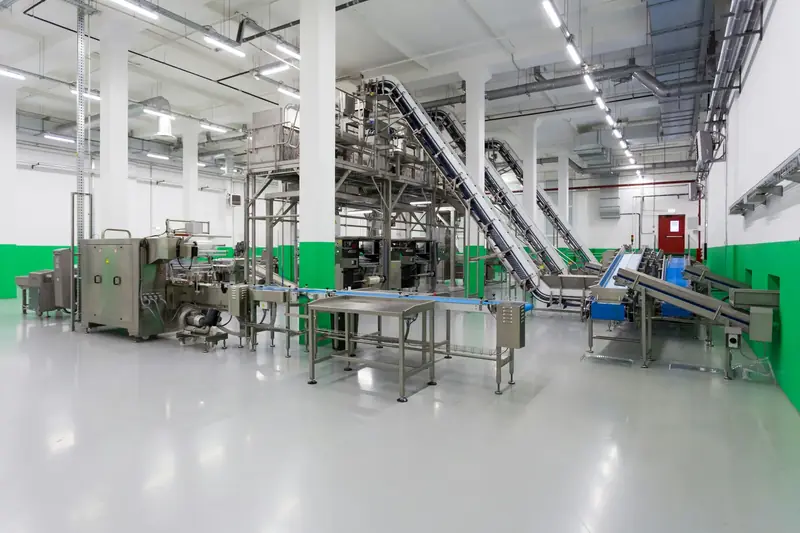
Our client, a leading company in the beverage manufacturing industry, aimed to convert its production floors into state-of-the-art intelligent factories. As part of their digital transformation strategy, the client recognized the need to target real-time conveyor belt anomaly detection to enhance operational efficiency, reduce costs, and improve safety outcomes.
The Problem
Necessity for a robust solution capable of real-time conveyor belt anomaly detection.
The client’s production process heavily relies on conveyor belt systems to move raw materials and finished products through various manufacturing stages. Unexpected failures in these conveyor belts could lead to significant disruptions, including production stoppages, increased maintenance costs, and even hazardous situations. These challenges highlighted the necessity for a robust solution capable of real-time conveyor belt anomaly detection.
The primary objectives were to:
- Minimize unplanned downtime: Early detection of potential issues to maintain continuous production.
- Reduce maintenance costs: Predict maintenance approach, only conducting repairs when anomalies are detected.
- Enhance safety: Prevent hazardous incidents by detecting malfunctions in real-time, ensuring a safer work environment.
The Solution
We designed and implemented an advanced Data and AI-driven system for real-time conveyor belt anomaly detection. The solution was built using Microsoft’s Azure ecosystem.
Key components of the solution included:
- IoT Sensors: The sensors across the conveyor belt systems monitored critical parameters such as belt speed, motor temperature, vibration, and load in real-time.
- Data Processing and Storage: The data collected from the IoT sensors was ingested via Azure IoT Hub. Azure Data Factory facilitated the seamless flow of data into Azure Data Lake, where it was stored and prepared for further analysis. Azure Databricks was used to clean, transform, and prepare the data, ensuring it was ready for accurate anomaly detection.
- Anomaly Detection with Azure Machine Learning: The core of the solution was built using Azure Machine Learning. We developed and trained machine learning models specifically designed for real-time conveyor belt anomaly detection. These models analyzed both historical and real-time data to identify any deviations from normal operating conditions.
- Real-Time Visualization and Alerts: The processed data and anomaly detection results were visualized in Power BI. Custom dashboards provided the client with real-time insights into their conveyor belt operations, displaying key performance indicators (KPIs) and immediately highlighting any detected anomalies. Automated alerts were set up to notify the maintenance team in real time.
Technology Stack: Azure IoT Hub, Azure Data Factory, Azure Data Lake, Azure Databricks, Azure Machine Learning, Power BI
The Results
30% downtime reduction, 25% reduction in maintenance costs
The deployment of the real-time conveyor belt anomaly detection system resulted in significant benefits for the client:
- Reduction in Downtime: The proactive detection of potential issues before they escalated into failures resulted in a 30% reduction in unplanned downtime, ensuring a more consistent and efficient production process.
- Cost Savings: By adopting a predictive maintenance approach facilitated by real-time anomaly detection, the client achieved a 25% reduction in maintenance costs, as repairs and replacements were performed only when necessary.
- Improved Operational Efficiency: Real-time insights provided by Power BI dashboards allowed the client to optimize their conveyor belt operations, leading to overall improvements in production efficiency.
Want to see what this looks like for you?
If your organisation is at the moment where AI needs to move from lab to production, this is the team that gets it there and stays to run it.
Production AI Systems Engineering: we score ten production dimensions, prove it on your real data, deploy it and keep it running.
More Success Stories

Case Study
The Migration Their Team Now Owns
A 12-month manual migration off SQL Server, compressed to months with an AI-assisted workflow — and the client's team owns the methodology.

Case Study
25+ Locations, One Commercial Platform
Data scattered across ERP, spreadsheets, and registries? See how a European B2B distributor unified 25+ locations on one commercial platform.
Case Study
From 56% to 94% Classification Accuracy
9.5 months, 5 engineers, .NET 9, and a 322-category taxonomy that holds in production — the 56% to 94% accuracy lift came from engineering.

Case Study
80% Less Manual Data Gathering: How a Global Mining Advisory Firm Freed Its Senior Analysts
A top-three management consultancy freed its senior mining analysts from manual data entry — two weeks from first line of code to production.

Case Study
66% Less Code, Zero to 99% Test Coverage in 5 Weeks
A leading maritime classification society was sitting on a compliance platform that had outgrown its original architecture.

Case Study
Beer & Data Analytics in Campaign Management
In the world of brewing, a beer giant has been tapping into something invigorating: the power of data analytics in campaign management.