
What is Robotic Process Automation?
C-suite interest in robotic process automation (RPA) has ticked up in the past few years, and especially since the onset of the pandemic.

What is Robotic Process Automation?
C-suite interest in robotic process automation (RPA) has ticked up in the past few years, and especially since the onset of the pandemic. The sudden worldwide shift to remote work, coupled with the need for reducing costs, makes RPA an attractive technology option for streamlining operations and optimizing workflows.
But what is robotic process automation, exactly, and how can it be aligned with business goals?
Robotic Process Automation (RPA) Defined
Though the name conjures images of a machine-driven future, there aren’t any physical robots used in RPA. Instead, they’re software bots, which can be programmed to perform almost any human-computer interaction – quickly and without mistakes.
If this sounds a little mundane, well, that’s exactly the point.

RPA is designed to automate our repetitive and tedious computer-based tasks. For example, RPA might be used to automatically generate and send invoices, input and process insurance claims, update a CRM, gather patient details for health appointments, or onboard employees.
This is really just the tip of the iceberg. If your business has a computer-based workflow that employees engage in repeatedly, there’s a pretty good chance you can automate it through RPA.
Which of your repetitive workflows could be automated for efficiency and profit?
The Benefits of Robotic Process Automation
There are many benefits to a well-designed and implemented RPA, starting with lower staffing costs, reduced human error, and increased productivity. For example, CIO describes an RPA created for a bank, comprising 85 bots running 13 processes, handling 1.5 million requests annually. The result? Added capacity equivalent to 200 new employees at 30% of the cost.
Take ecommerce returns as another example. A return is typically a heavily manual process, involving messages to customers, updating inventory, refunding the customer, updating the billing system, and so on. Letting software bots handle this process from beginning to end means that the return is completed faster, there are fewer errors, and team members have more time for strategic, meaningful work.
Which Tasks Could You Automate?
If you’re curious about RPA, but not exactly sure how it could help your company, here are few criteria to consider. Think about some of your employees’ workflows. For each one, ask yourself:
– Is the process rule-based?
– Is the process regularly repeated, or does it have a pre-defined trigger?
– Does the process have defined inputs and outputs?
– Is the task performed at volume?
If the answer to these questions is “yes,” the process is a good candidate for automation.
Risks of Robotic Process Automation
Like all new technologies receiving a lot of hype, RPA can backfire if not created carefully and implemented thoughtfully.
Think of RPA as a business process project rather than simply a promising technology. This way, RPA isn’t a shiny object, but a real solution to a real problem. Ensure you have a specific use case for your RPA. T
here’s a lot of buzz around RPA right now (and with good reason), but there’s no point in implementing it just because everyone is saying you should. Instead, have a clear and specific pain point that you want to RPA to address.
Second, be careful with scope and implementation. Many companies underestimate the time it can take to create the solution, especially for complex processes or those requiring exceptions. Be sure your technology provider or IT department fully understands the goals of the automation, and how the process should be carried out.
Complex processes with multiple triggers and exceptions need to be designed and implemented carefully.
What is Robotic Process Automation - Conclusion
RPA is not a magic bullet. And just like any much-hyped promising technology, it needs to be carefully implemented with a clear goal in mind. But when done correctly, automation can make a huge difference to productivity, customer satisfaction, and the company’s bottom line.
If you’d like to learn a little more about our approach to RPA, and see some of our results, please click here.
AI Delivery Squad
Need ongoing capacity? Our engineers embed in your organization and ship production AI continuously. Not a consulting rotation. A dedicated team aligned to your vision mission, operating inside your systems.
More articles

Agentic AI
Governed by Design: How Agents Build Data Products You Can Trust
AI agents can build a dashboard in minutes, but can you trust the number on it? Here’s how our agent harness delivers verified reports, and why it stops when a number isn’t governed.
Agentic AI
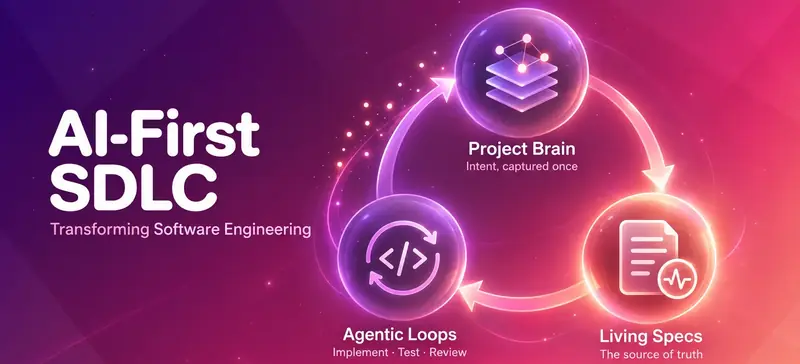
The AI-First SDLC: From Coding to Context Engineering
Software engineering stopped being about writing code. It became about managing context.

Production AI
AI This Week: The Harness Arrives | Week of July 14-July 20, 2026
Every week I filter roughly 15 AI newsletters down to what matters for production teams.

Production AI
AI This Week: Fault Lines | Week of July 7-July 13, 2026
This week had one theme: fracture. Three frontier labs shipped models in 72 hours.

Production AI
AI This Week: The Stress Test | Week of June 29-July 5, 2026
Eighteen days without a frontier model is a long time when your production systems depend on it.

Production AI
AI This Week: The Control Layer | Week of June 22-28, 2026
This was the week everyone stopped fighting over AI intelligence and started fighting over AI control.