
The Best Technologies for Business, Post-COVID
With the total business upheaval of the last several months, many company leaders are asking what their next digital move should be, now that they’ve dealt with the immediate crises.
With the total business upheaval of the last several months, many company leaders are asking what their next digital move should be, now that they’ve dealt with the immediate crises.

With the total business upheaval of the last several months, many company leaders are asking what their next digital move should be, now that they’ve dealt with the immediate crises.
In working with clients through the pandemic, we’ve found that COVID-19 has brought about the need for the same general digital implementations for most companies, regardless of industry. Of course, these are not necessarily the right recommendations for your specific situation; there are several factors that go into choosing the best technologies for business. But for companies who were not already fairly agile, did not have stress-tested systems in place, and were not prepared for a sudden shift to remote work, below are some good places to start.
Legacy systems make it impossible to provide the kinds of agile processes and that today’s market demands, a harsh reality that many companies have had to suddenly grapple with. And these systems will only get older, more difficult to integrate, more expensive to maintain, and harder to support. The pre-COVID “If it ain’t broke, don’t fix it” approach isn’t viable anymore.
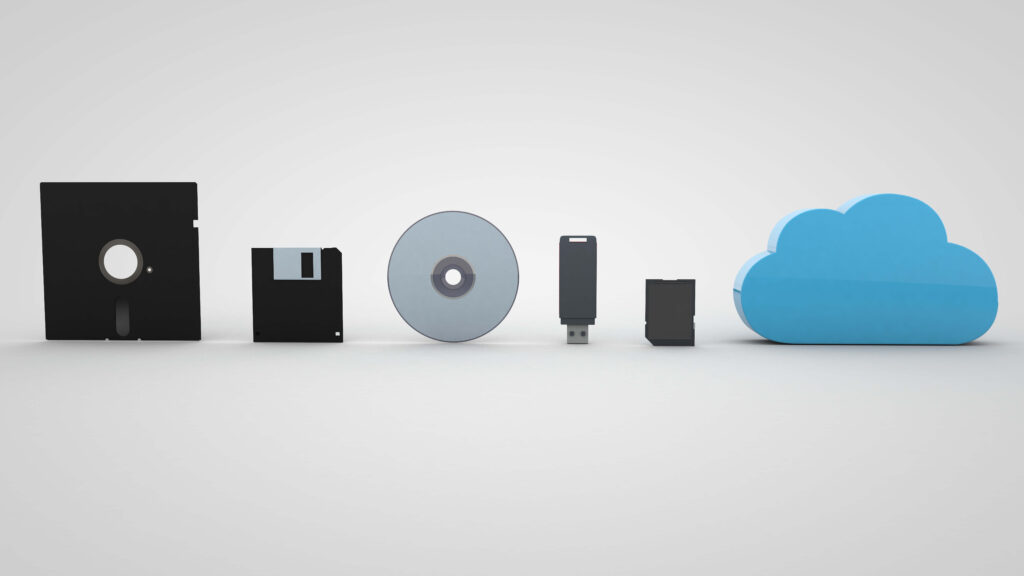
Legacy modernization is no longer a nice-to-have or a back-burner idea to return to later, but an urgent priority in keeping business running. The good news is that legacy modernization doesn’t have to mean a total overhaul of your systems, costing huge amounts of money. You certainly can rebuild from scratch – and that can often be the best bet, as it allows you to design a platform that fully serves your goals. But you could also modernize through digital decoupling, where some elements are replaced, some are migrated, some are redeveloped, and some remain as is. This lets you continue extracting value from your legacy IT, while achieving agility and reducing technical debt.
Ultimately, legacy modernization isn’t just about a hardware or software update. It’s about keeping your organization competitive in an ever-changing business environment.
With so much information available about your customers, competitors, transactions, and processes, there’s no reason to base business decisions on anything other than the actual facts. Especially now that we are already embroiled in so much uncertainty.
If you are among those who don’t have an analytics program just yet, don’t worry. This is an opportunity to do data analytics the right way – the way that will actually bring you the insights you’re looking for, along with ROI and bottom-line growth.
Just for starters, here are a few ways analytics can help you navigate through this crisis, and remain strong on the other side:

However, as Harvard Business Review points out, there are multiple approaches to analytics, and not all of them work out. In order to get the most out of your data project, ensure the following:
In short, remember that data analytics requires more than simply purchasing a BI tool and telling your team to have at it.
That’s a mistake already made by hundreds of companies, and one that you can avoid.
The results of your data analytics initiative will tell you exactly what your next digital priority should be.
Maybe you’ll discover that visitors to your website have questions that can be answered by AI. Maybe you’ll find inefficiencies in your supply chain that real-time insights can resolve. Or maybe employee training could be achieved more quickly and cost-effectively through VR – especially with social distancing.
Just keep in mind that each digital implementation should be done in the larger context of your company’s full digital vision, as well as the context of customer expectations and experience.
You can learn more about our views on legacy modernization here. Whether you choose us or another firm, we suggest this pragmatic approach in order to maximize your existing investments.
If you’re interested in seeing what your data might reveal, but aren’t sure where to start, you might like to know more about our Insight Snapshot service, a low-cost, low-risk way to get an initial glimpse at what your data has to offer.
And for clear, no-buzzword fundamentals on successful transformation, download our free ebook.
October 14, 2026
Software engineering stopped being about writing code. It became about managing context.
Read article
July 20, 2026
Every week I filter roughly 15 AI newsletters down to what matters for production teams.
Read article
July 13, 2026
This week had one theme: fracture. Three frontier labs shipped models in 72 hours.
Read article
July 7, 2026
Eighteen days without a frontier model is a long time when your production systems depend on it.
Read article
July 1, 2026
This was the week everyone stopped fighting over AI intelligence and started fighting over AI control.
Read article
June 22, 2026
This was the week the platforms stopped talking about AI and shipped infrastructure for it.
Read article
June 15, 2026
This week had one theme: the sovereignty fracture.
Read article