
Guardrails in Generative AI: Mitigating Hallucination Risks for Safe Applications
In today’s fast-paced tech world, generative AI is making waves, offering incredible capabilities in content creation, customer support, and more.
In today’s fast-paced tech world, generative AI is making waves, offering incredible capabilities in content creation, customer support, and more.

In today’s fast-paced tech world, generative AI is making waves, offering incredible capabilities in content creation, customer support, and more. But as businesses rush to embrace these powerful tools, they face a critical challenge: ensuring the reliability and safety of AI-generated outputs. After the high popularity of my previous article about how GPT works, we will explore below the essential role of guardrails in managing the generative AI hallucination risks and offer some practical strategies for businesses aiming to use this technology responsibly.
Generative AI, with models like GPT and DALL-E, has transformed our interaction with technology. These models can generate human-like text, create images from descriptions, and even write code. However, this power comes with significant responsibility. The same capabilities that make generative AI so powerful also pose risks, such as generating false information, biased content, or even malicious outputs. A particularly challenging issue is the phenomenon of generative AI hallucinations, where AI models produce content that isn’t grounded in reality or the provided context. That’s where guardrails become critical.
Guardrails are mechanisms designed to reduce AI risks and protect users and developers. They help prevent undesirable outcomes, like leaking sensitive information or generating harmful content. There are two main types of guardrails: input guardrails and output guardrails.
Input guardrails protect against risks like leaking private information to external APIs and executing harmful prompts. For example, in a healthcare chatbot, input guardrails might detect and mask patient names or medical record numbers before the information reaches the AI model, preventing accidental leaks of sensitive data.
On the other hand, output guardrails ensure the quality and safety of the generated responses. For instance, a content generation tool might use output guardrails to check for and filter out inappropriate language, ensuring the produced content aligns with the company’s guidelines and ethical standards.

When it comes to mitigating generative AI hallucinations, both input and output guardrails play crucial roles. Input guardrails can help prevent prompts that might lead to hallucinations, while output guardrails can detect and filter out hallucinated content before it reaches the end-user.
Hallucinations in generative AI occur when the model generates information that isn’t based on the provided context or real-world data. Imagine asking an AI about a historical event, and it confidently provides a detailed but entirely fabricated account. These hallucinations can lead to misinformation and reduce the trustworthiness of AI systems. Let’s explore some strategies to tackle these risks, with a focus on preventing generative AI hallucinations.
Context augmentation is a powerful approach that enhances the model’s context with relevant information to reduce reliance on its internal knowledge. For example, Retrieval-Augmented Generation (RAG) combines a language model with a retriever to fetch relevant data from external sources.
A customer service AI using RAG could access (retrieve) up-to-date product information, reducing the risk of providing outdated or incorrect details.

Another effective technique is query rewriting. This improves the clarity of user queries to ensure the model understands the intent correctly. For example, if a user asks, “What’s the capital?” the system might rewrite it to “What’s the capital of the country we were just discussing?” to provide better context.
Implementing retry logic can also help handle failures. If an AI writing assistant generates an irrelevant paragraph, the system could automatically retry the generation with slightly modified parameters.
For complex or sensitive queries, involving human operators can significantly improve accuracy. In a legal document analysis AI, human lawyers might review and approve AI-generated summaries of complex cases before sending them to clients.
While guardrails are essential for ensuring the reliability of generative AI applications, they can also introduce additional latency. It’s important to strike a balance. One effective strategy is parallel processing, where multiple guardrail checks run simultaneously to reduce overall processing time. Another approach is using a tiered system, implementing lightweight checks for all queries and more thorough checks only for flagged content. This helps maintain efficiency without compromising safety.
Implementing guardrails comes with its own set of challenges. Designing adequate guardrails requires a deep understanding of both the AI model and the specific use case. Implementing comprehensive guardrails can be computationally expensive and time-consuming. There’s also the risk of false positives, where overly strict guardrails might flag legitimate content, impacting user experience.
Perhaps most challenging is keeping up with AI advancements – guardrails need constant updating to remain effective as AI models evolve.
Detecting subtle hallucinations: Some generative AI hallucinations can be particularly challenging to identify, especially when they contain a mix of accurate and fabricated information. Developing sophisticated detection mechanisms for these subtle hallucinations is an ongoing challenge.
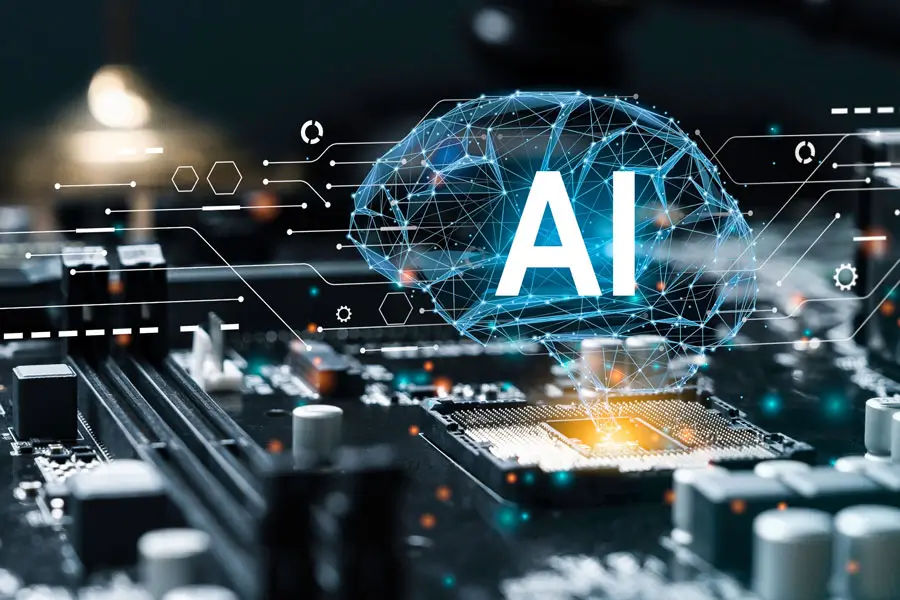
As generative AI continues to advance, we can expect more sophisticated guardrail technologies to emerge, particularly in addressing the challenge of hallucinations. We might see AI models with built-in fact-checking capabilities or systems that can provide confidence scores for generated content. Additionally, there may be advancements in multi-modal verification, where AI-generated content is cross-referenced across different types of data (text, images, structured databases) to ensure consistency and accuracy.
Deploying generative AI applications requires a thoughtful approach to guardrails and hallucination mitigation. By implementing robust input and output guardrails and adopting strategies to reduce hallucinations, businesses can harness the power of generative AI while ensuring safety and reliability. As the field evolves, staying informed about the latest AI safety practices will be crucial for maintaining trust and effectiveness in AI systems.
Taking the Next Step
As you consider integrating generative AI into your business processes, start by conducting a thorough risk assessment. Identify potential vulnerabilities and design guardrails tailored to your specific use cases. Remember, responsible AI implementation is not just about technology – it’s about building trust with your users and stakeholders.
For more information on implementing AI guardrails in your organization, contact Tecknoworks. Our AI experts can help you navigate the complexities of safe and reliable AI deployment.

October 14, 2026
Software engineering stopped being about writing code. It became about managing context.
Read article
July 20, 2026
Every week I filter roughly 15 AI newsletters down to what matters for production teams.
Read article
July 13, 2026
This week had one theme: fracture. Three frontier labs shipped models in 72 hours.
Read article
July 7, 2026
Eighteen days without a frontier model is a long time when your production systems depend on it.
Read article
July 1, 2026
This was the week everyone stopped fighting over AI intelligence and started fighting over AI control.
Read article
June 22, 2026
This was the week the platforms stopped talking about AI and shipped infrastructure for it.
Read article
June 15, 2026
This week had one theme: the sovereignty fracture.
Read article